Friday, June 7, 2013

Yes, Rich does pilot

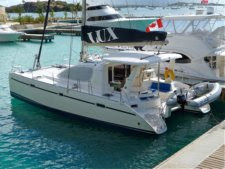
It has come to our attention that we have not offered proof that Rich actually does more than make omelets! Yes, Rich has been a great addition to our crew. He works hard at any task, and he has been taking lots of turns at the helm.
Peggy has a great shot of Rich doing his bridge dance. We'll post that soon.


Thursday, June 6, 2013

Running Just As Fast As We Can... Or Not!

Well, we started out the day with the plan to run ahead of the storm. But, on the ICW, there is always a pesky bridge to hold you back. So, as we got closer, we found out that the Centerville bridge is closed between 4 and 6 PM. So, we ended up killing time anyway. As always, our intrepid crew kills time meaningfully.


And, of course, this was easy to do because we were sailing! Look at our speed.


Tonight, we'll settle in at Great Bridge. We plan to try to out wait the rain there. Since it's already 6 PM, we really don't want to press on beyond this. Or, at least, most of us don't. We all seem to get tired by the end of the day.


Today's Seminar- Small Engine Repair

Well, it was still calm and not raining this afternoon, so some of the crew decided to take on small engine repair. The dingy motor needs some work, so this was the perfect opportunity to give Carol her shot at an engine!

As you can see, it was a serious effort. There was an abundance of tools.


Running Just as Fast as We Can

We left the Alligator River Marina at 7:20 AM this morning, and we are heading north. As many of you may know, we are just ahead of Tropical Storm Andrea. We hope to go about 10 to 12 hours today to get us to Great Bridge, VA. We plan to spend two nights there while Andrea goes by.


As you can see the clods are slowly building as the chase us north. Ahead, we have blue skies with fluffy clouds.


This morning was a little rough again on the rest of the Albemarle Sound. As usual, your intrepid writer chose to pass the time away in her bunk listening to a book on tape. But, we are making steady progress now that we are back in the ICW. We just passed Coinjock. We're doing 8.2 knots! It's currently calm enough that Mike and Carol are attempting surgery on the outboard motor.

Wednesday, June 5, 2013

At Dinner at the Shell Gas Station

Well, we're back at our favorite marina restaurant- the Shell station marina at the Alligator River bridge. It's amazing, but the food here is great!


Days that Bug Us

Most days, being on the water is just about fun. Like today- the sun is shining, and the Albemarle Sound is not choppy. We are headed to the Alligator River Marina where we will once again enjoy a great shrimp dinner served at a gas station! It would have been a perfect day, except.....

First, Peggy noticed that there were not a lot of birds around. We came to the conclusion later that the birds don't stick around because this appears to be a popular spot for military jets to buzz around. We think the birds probably don't care for all that noise. So, at the first sign of the jets, the birds all take off. There's probably some other reason, but we've seen an awful lot of jets buzzing by today!

Next came the horseflies. And, yes, at times they seemed as big as horses. The crew wanted to catch four and harness them to LUX to increase our speed.

We also ran into a swarm of ants.

So, we're busy killing bugs

We also have seen some great things on the water. A beautiful boat passed us.

And we are making progress. Rich drove most of the morning. But, Terry is back at the helm for the afternoon.


Days that Bug Us

Most days, being on the water is just about fun. Like today- the sun is shining, and the Albemarle Sound is not choppy. We are headed to the Alligator River Marina where we will once again enjoy a great shrimp dinner served at a gas station! It would have been a perfect day, except.....

First, Peggy noticed that there were not a lot of birds around. We came to the conclusion later that the birds don't stick around because this appears to be a popular spot for military jets to buzz around. We think the birds probably don't care for all that noise. So, at the first sign of the jets, the birds all take off. There's probably some other reason, but we've seen an awful lot of jets buzzing by today!

Next came the horseflies. And, yes, at times they seemed as big as horses. The crew wanted to catch four and harness them to LUX to increase our speed.

We also ran into a swarm of ants.

So, we're busy killing bugs

We also have seen some great things on the water. A beautiful boat passed us.

And we are making progress. Rich drove most of the morning. But, Terry is back at the helm for the afternoon.


Strangers Just Passing Through

Today, we are moving along the ICW toward the Alligator River. We started after a lovely breakfast of omelets by Rich and pastries from Beaufort Cru Coffee Shop. Rich makes a mean omelet. Today's featured ham and cheese.

On the waterway, we were passed by a boat called Retired Sailor. If you guessed that it was a trawler, you would be correct. We let Retired Sailor pass us just before our favorite bridge- the one that claims to be 65 feet, but we always scrape it. Today, it was Rich's turn to do the bridge dance. He did a great job- aided by the fact that it was low tide. But, we still scraped.

Further along, we met another boat. This time it was a tug with a barge. They look even bigger in the narrow sections of the ICW!


A Recipe for Dinner

As mentioned in an earlier blog, we had meatballs for dinner. And, it was our own creation! We started with the rest of our meatballs. We had purchased the Price Club size bag in Marsh Harbour, and this was our third meal out of it. Anyway, we poured a large can of diced tomatoes into our big pot. We added the meatballs, some Italian seasoning, and some cinnamon. Yes, cinnamon is my secret ingredient in any tomato sauce! We also added a small can of mushrooms. We cooked the meatballs until they were heated thoroughly. 

Then, we opened a packet of Alfredo mix in powdered form - we used Knorr's mix. We put the powder in a small bowl and added just enough water to get it thoroughly mixed. We then added the mix to the meatballs. And, voila, we had meatballs in a creamy gravy sauce. A total yum. We served it over mashed potatoes with green beans as you can see in the picture.


All Day on a Boat


Most days are really great on the water. But some days are just not as much fun. Today was different than the day in the ocean. But, the boat was really rocking and reeling on the waters of the sound. Once again, your intrepid writer found it better to sleep. Even Rich said that today was 'uncomfortable.' But, the rest of the crew persevered, and we are now anchored in Upper Dowry Creek. Once we anchored, the strawberry daiquiris came out.


Once again, the inverter proves to be a great friend to your boaters.

While the crew enjoyed drinks, dinner preparations continued. And then we all sat down to eat.


Linda, it might not be your kind of yum, but the crew thought it was a double yum. We used up the test of our gigantic bag of meatballs. Mike just said, "Got a feeling that we'll be having meatball subs for lunch tomorrow." He might just be right.

Yesterday in Beaufort

We had a lovely day playing tourist in Beaufort yesterday. In the morning, some of us went shopping at the Piggly Wiggly! We thought it would be fun to visit a southern grocery. But, I must say, it was nothing like Harris Teeter. You certainly can get spoiled quickly. I really wanted to purchase some Carolina Caviar, but no such luck. The Piggly Wiggly had a very small deli. They also had a very small selection of store-made foods. They didn't even have boxed milk. So, we got the essentials and went back to the boat. 

Once everything was stowed, we headed off to town to explore. We ended up at the North Carolina Maritime Museum. It's truly worth a visit if you ever come to Beaufort. They have a great exhibit on the Coast Guard. And, since Blackbeard sailed in this region, they have a great exhibit on piracy. Blackbeard's ship, the Queen Anne's Revenge, was found near Beaufort, so they have artifacts as well as videos about the archaeological work on the site.

We then took the time to visit some of the local shops. The Bag Lady had incredible purses and shoes. The nautical books and gifts shop had some books that tempted (but we held back). But, we must confess that ice cream and fudge purchases were made.

Back at the boat, we used some of our fresh-caught tuna to once again make kabobs. It seems the crew really likes the fish/pineapple/green pepper kabobs with mango chutney sauce! Seems my own creation has found a home in the LUX menu! Must get more chutney......

Finally, some of my readers may be wondering about the Carolina Caviar. We certainly were curious. But, only Rich was willing to risk it by ordering it at Clawson's. It turns out that Carolina Caviat is black eyed pea salad. Or maybe it was actually crowder pea salad. Anyway, it had peas, red onions, some other stuff, and a vinaigrette dressing. Rich said it was very tasty.

Tuesday, June 4, 2013

Breakfast in Beaufort

We're having breakfast at Cru- it's a wine bar/coffee shop in Beaufort.


Multi-Purpose Cockpit Cushions


LUX was equipped with a set of seven blue folding seat cushions. We've wondered about the cushions found on other Leopard 40s until we spent some time with Ed and Mary Beth on Esprit de Mar. They noted that the big cushions are difficult to store and make it challenging to open the cockpit seat lockers.


Of course, there is the normal use of the cushions in the cockpit. They unfold as shown to cushion our derriere and back. They are also useful to take forward for sitting on the grand staircase or on the trampoline.


Stacked, they make a great additional seat, provided that they are not being used elsewhere. We often use them in front of the fridge/freezer. Adding or removing a cushion adjusts the height. They are typically stored in a stack in front of the freezer, which makes the use as a fridge spelunking station rather convenient.


Finally, they fit a variety of locations where a work cushion for knees, hips, ribs, and backs. Here is the setup that we use to work on the electrical systems that are located under the galley sink. One cushion for the hips, a stack of two cushions for the external threshold, and one cushion inside for shoulders. No more bruised ribs and hips from working on the electrical system. A single cushion works well for the knees, though we avoid using it in really messy jobs.

The cover is a vinyl mesh, zippered on a foam square.

We've not seen similar cushions in our travels. If you know where to find them, please leave a comment.

  -Terry


Monday, June 3, 2013

At the North Carolina Maritime Museum

Taking some time out to play tourists today.
Yes, that is me with Captain Blackbeard.


Water Tank Leaks and Welding - Again


When we picked up LUX in Marsh Harbor for the spring trip back to Annapolis, the local charter maintenance guy told us that the stbd water tank was leaking. He had talked with the local Moorings folks, who told him that they repaired the tanks with fiberglass. To our knowledge, that wouldn't work because the fiberglass won't bond to the High-Density PolyEthylene (HDPE) of the tank.

Sure enough, when we filled the tank, the water slowly leaked out. When we removed the tank, the fiberglass patch popped right off, as shown in the first picture. We noted that our old weld job had held - we are dealing with a new fracture.


As usual, the first step of a repair is doing the preparation. After removing the old fiberglass repair, we used a rotary tool to open the crack to a U or V shape and to remove the old, damaged material, which had a brown color. We used a heavy duty cutoff disc held at an angle to the fracture. The finished prep is in the next picture. You can see the marks left from the rotary tool cutoff disc.


We have a set of HDPE plastic strips from an old milk jug. The jug must have the recycle designation HDPE molded into the bottom. HDPE is also used in potable antifreeze jugs and a variety of other gallon jugs. It is good to only use material from a food-grade source. The white material we have is a nice contrast to the green tank material - we can easily see what work we've done.

Now we are ready to start welding. We use a heavy duty heat gun ($20 from Home Depot) and a Weller hot knife (Sailrite). The heat gun is used to heat the tank and the strip of new material so that they start to turn translucent. Move the heat gun further away at this time, applying just enough heat to keep the material warm but not enough to cause it to sag. Then use the hot knife to press and weld the new strip to the tank material. The localized heating from the hot knife will cause the new strip of HDPE to melt as well as the layer of tank material just below it. There are several videos on the Internet that show plastic welding and watching a few of them is helpful before starting on something important.

As with any welding (plastic or metal), the first layer can be challenging, because there isn't much of the old material left and it may be necessary to bridge a gap. Only heat the materials enough to soften them and use the hot knife to weld them together. We started with a narrow strip at the bottom of the repair and worked up to larger width strips. Here is a sequence of photos that show the process of welding a strip of material to the tank.

Cut off the desired strip length with the hot knife and tack down an edge.


Use the heat gun to heat the strip and the tank until the strip is translucent. Press the new strip into the pliable material under neath. Move the hot knife slowly to allow the heat to penetrate the thin strip, welding it to the material underneath.


Use the hot knife to press the new material down onto the softened tank material. Make sure you don't get bubbles trapped under the new strip. If that happens, cut through the strip with the hot knife to open the void, then slowly work material back into the cut using the hot knife. I like to work from the center of the new material out to the edge to help prevent voids.


We're nearly finished at this point, having added multiple layers of HDPE to build up to the original tank thickness. It sometimes helps to hold a board or other backing plate behind the weld to keep it from sagging. If the tank is sagging around the weld, you're using too much heat gun. Let it cool until the HDPE cools enough to become opaque, then start over. Working with small strips allows easy heating of the strip without over heating the tank itself. This is a prime example of many small steps being best.

Practice helps a lot. Food-grade 5-gallon buckets used in restaurant supply are a good source of HDPE as well as a container on which to practice welding.

We thought about adding a big patch over the entire area, but decided that working out the voids that would undoubtably occur was not worth it. That doesn't mean that it isn't a reasonable approach - just that we thought that multiple narrower strips were easier to add and would result in the same strength.

Finally, we taped the hot knife to a length of PVC pipe and smoothed out the weld on the inside of the tank.


Here's a picture of the procedure in progress.


And the final result. Practice has definitely helped, because this is is the best looking weld so far. We used a strip of HDPE that was about 12 inches long and 3/8 to 1/2 inch wide to do this weld.

After a day-long offshore trip from Wrightsville Beach to Beaufort, NC, the weld is holding. So the short-term prognosis is good.

  -Terry