Travel and maintenance of LUX, a Leopard 40 catamaran
Use the Search, Popular Postings, and Labels sections to find specific topics. 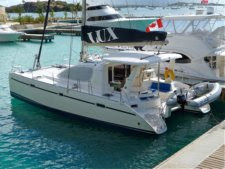
Monday, June 11, 2012
C.O.D. Once Again
Well, it is COD again- yes, crack of dawn. It is 6:31, and we are preparing to leave Southport. BTW, the interesting thing about Southport is that they are preparing to film a movie here. They are building a movie set house right on the old harbor. It is a Nicholas Sparks book - Safe Harbor. We thought they were restoring an old house, but no, they were building a shell! Mike was most fascinated by the trash bin. It was full of lovely pieces of lumber. He truly coveted some of the 2x4s. Seems he has a little boat project. But, he did not have a saw to make them the right size. So, he had to leave all that lovely wood behind. It was a sad thing to see the look on his face. And, no souvenirs at this stop. As everyone kept telling us - it was Sunday in Southport. Nothing was open but the Walmart and a couple of restaurants.

Sunday, June 10, 2012
Fishy Fishy
Yes, we had a great meal in Southport at the Fishy Fishy Cafe! Both Carol and I ordered the fried shrimp. For $16.95' you got two dozen fried shrimp-tails already removed! They were so good! Mike had the fried shrimp and scallops. They were good, too. I know this because he gave me a scallop. Peggy had salmon. I don't think it was local. But, it was really good, or so she said. Jacob had the filet, and he said it was good. Afterwards, there was a force drawing us in the opposite direction of our boat. It was Flavas, and yes, it was an ice cream place. And, yes, we had to have ice cream. We also met up with a couple we had met in St. Augustine. We shared horror stories about the thunderstorm when we both left St. Augustine. Our storm story was, of course, much better because we were on the ocean and they were on the ICW. We all plan to leave early tomorrow to get a good start on the next leg. It's a long one, and it might not include a marina tomorrow. And now, for the patient people, another boat update. The boat ran fine without the new fuel pump. Mike thinks maybe he and Terry finally got the tank clear. The marina had a super sucker sewage pump, so Mike finally got all the tanks clean. He says they sound like the Tin Man when he raps on them. Maybe this is a happy ending to a ......problem. Mike repaired the water hose - it had developed a leak. He checked over the engine. He expoxyed the registration letters to the hull of the boat so that we are now within required standards.All in all, a productive day.
Sunday in Southport
We all got up pretty early today so that we could get to Southport by the early afternoon. It is at mile 309. I am told that means we have 300 miles to go on the ICW. The big entertainment of the moment is the mega yacht pulling out. You just cannot get good help these days. That was evident when voices started yelling, "Forward, Chris!" Yes, they almost backed into the fuel dock! It was 112 feet long. And it had a lovely dingy. We, of course, would refer to it as a runabout. It had two 200 horsepower engines. And the dingy had a very nice hardtop Bimini. Great entertainment on a Sunday afternoon. Note to Terry: Yes, we are going out to dinner tonight. I asked to go because the name of the restaurant is Fishy Fishy!
Today was a nice day on the ICW. That, of course, is because we were early enough to not be in competition with the jet skiers and the power boaters. By the time they were beginning to show up, we pulled in. We arrived here at 1 PM. The plan was to use today as the opportunity to get more provisions. Peggy and I took the taxi to Walmart. Yes, it was a Super Walmart so that we could get everything we needed in one place. I did buy more shrimp. But they were frozen. It will take me a long time to get over the taste of truly right off the boat shrimp, but I will force myself to enjoy the frozen fellows.
While we were in Georgetown, SC, I bought a cookbook with recipes that don't require refrigeration. It is called The Storm Gourmet:A Guide to Creating Extraordinary Meals Without Electricity. I found some recipes I really wanted to try, so I bought the supplies for that. By the way, the cookbook doesn't heat anything either. I am still having problems adjusting to American grocery stores. I buy too much just because I can. After all, when I have paid $4 a dozen for eggs, how can I resist the opportunity to buy 18 eggs for only $2.59? I am sure I will slow down soon, but for now we are really eating well!
So, we are at the dock at a marina. Mike is off buying ice. Peggy is doing laundry. Jacob is playing in the dingy. He was actually working with Mike, but Carol asked Mike to drop everything and get ice. Mike didn't mention that he and Jacob were doing a project. So, Jacob got a break! Carol is busy reading the ICW books to get more of our journey planned. For those who have gone through this entire entry hoping for boat updates, here is the latest. We are moving the dingy from the front of the boat to the davets. I will not get reading lights in my cabin because we blew a fuse. And, there were not any fuses at Walmart that were the right size. And, the new fuel pump started annoying the charging circuit. So, Mike took it off line before we got started for the day. Oh well, the fuel pump saga continues.
Leaving Georgetown on June 9
Saturday, June 9
Well, it was a lovely day in Georgetown. It was calm and sunny. Not any breeze in sight. A perfect motorboat day, so LUX will do her cruiser imitation. Terry took off for the airport, and we took off for the ICW. Terry had to get back into the grind,so we sent him off in a taxi-in style, by the way. It was a black Cadillac. Before we left, Carol and I made one more foray into town. We went to the local seafood market where I bought jumbo shrimp fresh off the boat for $8 a pound. Yes, you read that correctly. I also bought the special of the day- their own crab and shrimp dip. Dinner tonight should be quite the great treat. It was a neat experience in that the market was actually the warehouse where the shrimp boats dock and unload their haul. And did they ever have fresh. The market has a clean sea air smell, which tells you that the stuff inside really is fresh. I had to buy my stuff and get out of there quickly- before I gave in to the temptation to buy more seafood than we could store.
So now we enter the exciting part of the day. As my readers may know, parts of the ICW have shoaled in. Mike found one of those spots around 1:30. We scraped along, turned around, and went the other way around that spot. Then we began the excitement of the double bridges. One is the tall one which we have to pass under just right to keep from removing parts of our mast. At this moment, Mike is going at zero knots. At least it feels that way as he tries to gracefully dance his way under the bridge. Magnificent work! He did it again. And now we await the motion of the swing bridge. That requires us to dance back and forth in an area only about 6 to 8 times the length of LUX. Luckily, the bridge opens on demand. Unfortunately, it takes a while to get a swing bridge open. It's 2:46 in the afternoon, and the fun just keeps coming.
It is now 6:30. We made it to the Myrtle Beach Yacht Club. That was after we passed under at least a million more fixed bridges. Okay, I exaggerate. Today, we went under nine fixed bridges and by three swing bridges. Let me remind you that all the fixed bridges are supposed to be 65 feet - exactly what we need. So EACH one of those bridges required a long slow dance to make sure we made it through. And, we had to fight our way through an absolute pestilence of jet skis. Every time we turned around, there were more of them buzzing us. Then, we also had the regular Saturday crowd of runabouts. Throw into that some nice cabin cruisers, and you have a churning channel of water. We would have to wait until the bridge area was clear so that Mike could negotiate the passage under the bridge with no wake under the bridge. Note to self: Do not do ICW on a Saturday if you have a choice. Also, keep watch for those people who insist on pulling kids on inflatables. Not many of these people appear to have taken many courses from USPS. Especially the person who lost the child off the inflatable in the middle of the ICW in front of us. Also, there seems to be a reading problem. No wake appears to be really difficult to understand. That was the worst at the fixed bridges. The boats would roar right past us. A mile after the last bridge, we pulled into a dredged basin of the Myrtle Bridge Yacht Club. We are tied up to the last t pier available. Mike is cooking our wonderful shrimp. Peggy and Jacob are about to make a green salad. Jacob is in trouble, by the way. His back is very red. And that would not be from lashings from the captain. Too much sun for our youngest crew member.
Friday, June 8, 2012
Evening in Georgetown
Today has been a great day ashore. We have all been off shopping and sightseeing. And, some boat things got done. Jacob and Mike cleaned the boat on the outside. They washed it down and cleaned the windows. Terry gave the boat new diapers. Oh, you might want to know about the diapers. Peggy said they are the XL Pampers. Terry said the diaper is an oil absorbent pad. The dingy got its registration numbers. LUX got her registration numbers and her home port name put on her backside. She got filled up with fuel. The port engine seems to be running okay. Peggy and Terry made it to the bakery, and bread was purchased. The best story of the day, however, was mine. In the morning, when I went to check out the marina store, the guy in the store asked if he could help me. I said I just wanted to look at what they had. He said, in essence, that they had not much other than books and tee shirts. I said that I liked books, and I would like to look anyway. Later in the morning, we were in a store where the sales ladies were really friendly. We got into a conversation, and I told them about my experiences in the marina store. They were so sweet. They were horrified that anyone in their town would be so rude to visitors. I kept saying that it really wasn't rude; the gentleman just really didn't think there was anything of interest for me in the store. But, they continued to follow me around the store talking, asking questions about our trip, and apologizing for the rude guy. During this time, I asked if they had a can opener in the store. The one on LUX is terrible, so I wanted a new one. They did not have one. But, they ended up GIVING me one from their own employee kitchen! They were so incredibly sweet. If you are ever in Georgetown, SC be sure to shop in Tomlinson's. They not only have great clothes at good prices and a wonderful selection of acrylic dishware, they have really nice sales people.
We had lunch at Morsels, a lovely local deli. Mike and Terry had shrimp tacos. Peggy and I had really good Reuben's. Peggy ordered fries, but you don't need to worry about her eating fried foods that are bad for her. Terry and Jacob kept taking her fries to make sure she didn't eat too much.
For dinner, we ate at Limping' Janes. It was a really neat restaurant. They use all locally sourced produce- most of it from their own farm. I had some really amazing carrots that were just barely steamed. They were so tasty. Everyone really enjoyed their meal. Afterward, we walked around town. Jacob and I had ice cream at a local ice cream place. Then, back to the boat to get ready for another day.
The Light At The End of The Tunnel
Is that a light at the end of the tunnel? Or is that a train headlight? After the heat exchanger is reassembled, I head off to West Marine, on foot, with a planned stop in Sailor's Exchange (worth the stop) and another stop in AutoZone for an electric fuel pump. I return with some parts from each location, including 36ft of fuel supply hose, four 3-way valves, and various other parts. Back at LUX, the system takes a few hours to implement. We replace all the fuel supply hoses on the port engine. The hand pump bulb and the main feed lines are connected to a 3-way valve, allowing us to select either supply feed and to also use the hand pump to prime all the lines. The intermediate setting of the valve connects all three lines together, allowing us to pump fuel down the main supply line as well as through the primary filter and into the fuel lines to the engine. The engine runs fine with the new system! We're finally ready to leave St. Augustine. We take a break for lunch at the local Greek/Polish restaurant and walk around the shops for an hour or so. It is a nice break from engine work. We all agree that St. Augustine is a neat town, with a lot of museums and galleries that warrant a future stop with more time to spend.
We depart St. Augustine on June 3, heading up the coast towards Charleston. The port engine exhibits some periods of rough running. We now have the option of choosing a pickup and of pumping fuel with the hand pump. The periods of smooth water coincide with a smoothly running engine. Periods of rough water, particularly when the seas make LUX roll, coincide with rough engine running. Since we've not been able to run the engine much, we have 7/8 of a tank of fuel (45 gal tank). At 3/4 gal to 1 gal per hour of fuel consumption, we will need to run a few hours to get the tank near empty so that we can inspect it. The tank does not have an inspection port and the fuel gauge sensor will require some investigation to determine how to get it out of the tank. So far, we've not determined how to remove it so that we have the whole access port for inspection - a port that's only about 1.5 inches in diameter.
We're north of Charleston, SC on June 7, and the port engine started with its problematic operation. We quickly went to the hand pump bulb and found that it was soft. The fuel level is down to 1/4 tank and the bulb feels like it is sucking air. We have been wondering how long its pickup is and whether it goes as deep as the main fuel pickup. There seems to be a sump in the bottom of the fuel tank under the main fuel pickup. We installed the electric fuel pump and it pumped air. Do we have an air leak or is the tank empty. The fuel gauge reads 1/4 tank, but we've not used LUX enough yet to know if it is accurate.
We decide to open the port fuel tank while under way to see how much fuel is in the tank. The gauge reads 1/4 tank. How much fuel do we need to pump out so that we can see the bottom of the tank? Mike is able to get the fuel gauge sensor removed from the tank and we're able to look inside. A dip stick shows about 1/4-inch of fuel. There is a thin layer of bio muck in the bottom of the tank. A baffle prevents us from viewing the fuel pickup area. While there is a sump in the bottom of the tank, there is no drain in it and it does not coincide with the location of the pickups, either the main pickup or the priming bulb pickup. So it seems that our problem is likely due to bio-muck. We had recently purchased bio-cide to treat the diesel and we add some to the tank to kill whatever is living in the the small amount of fuel that remains.
On our first leg, we had run the port tank down to 1/4 tank, which is where it is currently reading on an empty tank! So perhaps part of the problem was picking up bio-muck from the bottom of the tank, plus stirring up the muck when the tank ran down to a really low level.
We calibrate the sensor so that the fuel gauge reads full and empty at the two extremes of motion, also checking that the half reading is also correct. It has a float that can be adjusted, so we make the adjustments so that the fuel gauge reads correctly. It will read full when the tanks are about 5 gal from being 100% full. Leaving that much space at the top of the tank is probably a good idea anyway. With the port tank now calibrated, we had to do the same to the starboard tank. We found that it was much cleaner in the bottom.
For other Leopard owners, the fuel tank breather hose on both tanks has sagged and tends to collect fuel in the dip. When adding fuel to the tank, the fuel in the breather tube is pushed out and winds up in the water if we're not careful. Supporting the hose so that a dip doesn't exist will take care of the problem.
To Be Continued...
We depart St. Augustine on June 3, heading up the coast towards Charleston. The port engine exhibits some periods of rough running. We now have the option of choosing a pickup and of pumping fuel with the hand pump. The periods of smooth water coincide with a smoothly running engine. Periods of rough water, particularly when the seas make LUX roll, coincide with rough engine running. Since we've not been able to run the engine much, we have 7/8 of a tank of fuel (45 gal tank). At 3/4 gal to 1 gal per hour of fuel consumption, we will need to run a few hours to get the tank near empty so that we can inspect it. The tank does not have an inspection port and the fuel gauge sensor will require some investigation to determine how to get it out of the tank. So far, we've not determined how to remove it so that we have the whole access port for inspection - a port that's only about 1.5 inches in diameter.
We're north of Charleston, SC on June 7, and the port engine started with its problematic operation. We quickly went to the hand pump bulb and found that it was soft. The fuel level is down to 1/4 tank and the bulb feels like it is sucking air. We have been wondering how long its pickup is and whether it goes as deep as the main fuel pickup. There seems to be a sump in the bottom of the fuel tank under the main fuel pickup. We installed the electric fuel pump and it pumped air. Do we have an air leak or is the tank empty. The fuel gauge reads 1/4 tank, but we've not used LUX enough yet to know if it is accurate.
 |
| Muck in the Port Tank |
 |
| The Starboard Tank Is Much Cleaner! |
On our first leg, we had run the port tank down to 1/4 tank, which is where it is currently reading on an empty tank! So perhaps part of the problem was picking up bio-muck from the bottom of the tank, plus stirring up the muck when the tank ran down to a really low level.
We calibrate the sensor so that the fuel gauge reads full and empty at the two extremes of motion, also checking that the half reading is also correct. It has a float that can be adjusted, so we make the adjustments so that the fuel gauge reads correctly. It will read full when the tanks are about 5 gal from being 100% full. Leaving that much space at the top of the tank is probably a good idea anyway. With the port tank now calibrated, we had to do the same to the starboard tank. We found that it was much cleaner in the bottom.
For other Leopard owners, the fuel tank breather hose on both tanks has sagged and tends to collect fuel in the dip. When adding fuel to the tank, the fuel in the breather tube is pushed out and winds up in the water if we're not careful. Supporting the hose so that a dip doesn't exist will take care of the problem.
To Be Continued...
Time for a Beer
The over temp alarm had not sounded, so we think we're safe. Checking the hoses is ok. The raw water filter is empty. Grrr. Another problem to troubleshoot. Off comes the raw water impeller cover. The impeller only has half of one blade attached. Several blades are wedged in the impeller housing and exit port. Sigh. The raw water system will need to be disassembled to find all the blades so that they don't block the cooling water flow. We start the disassembly and find a couple of blades in the hose that feeds the heat exchanger and can feel one of the blades in the heat exchanger end cap. The antifreeze is still hot, the engine is hot, so it is time to take a break and let everything cool. It's dinner time, so we break for the night, get cleaned up, and go to 1A1 restaurant for dinner. It is a micro-brewery and a beer is definitely on our list of refreshments.
June 2 starts with the continued disassembly of the heat exchanger, starting with draining the antifreeze into a container. Fortunately, we've been keeping the gallon water jugs and are able to recycle them for diesel and antifreeze catch basins. Cutting them up allows us to make funnels that fit into weird places, such as under the end of the heat exchanger, where the antifreeze comes out. The engine parts diagram shows a potential drain on the side of the engine, but ours doesn't have one.
With the heat exchanger end cap off, we find the remaining impeller fins, checking them on the hub to make sure we've found them all. The heat exchanger core looks ok; no rubber parts wedged in any of the tubes. To make sure, we take a piece of flexible wire and run the length of each tube in the core, which is tedious, but goes reasonably quickly. Everything checks out ok and the heat exchanger is soon reassembled. We had two spare impellers on board as part of our engine spares kit. The impeller is installed and antifreeze poured back into the engine. Success! The engine now runs and pumps water. We think we're getting to the point where there aren't many more things to disassemble and repair on this engine.
By the way, the starboard engine continues to run fine. It is on a separate fuel tank and we keep reminding ourselves that we won't touch it until we have a reliable port engine.
Now that we've demonstrated that the bulb hand pump pickup runs fine, it is time to devise a revision to the fuel system. Georgiana talks with Anthony, her brother, an ex-USCG Chief Engineer. He says that the plastic core of fuel lines tends to deteriorate over time and may collapse under pumping vacuum, causing fuel starvation. He also told of various sources of paper and towels in the fuel system. We'll let him comment on his experiences. So we decide to create a valve system that allows us to select either of the two pickups using a 3-way valve. We also consider an electric fuel pump to augment the mechanical pump. We've thought about more valves to allow connecting the port engine to the starboard fuel tank or to pump fuel from one tank into the other (going through a filter so that any contamination doesn't migrate). But we've not gone that far yet. If we do that, we'll probably also configure a fuel polishing system using the small electric fuel pump.
We've run out of time today to do any more. We had planned to eat on board tonight, but after all the engine work, bending upside down over the engine and contorting myself into the compartment, I declared that I wanted to go ashore for dinner and a beer. So we walked to Santa Maria restaurant, adjacent to the marina.
To Be Continued...
June 2 starts with the continued disassembly of the heat exchanger, starting with draining the antifreeze into a container. Fortunately, we've been keeping the gallon water jugs and are able to recycle them for diesel and antifreeze catch basins. Cutting them up allows us to make funnels that fit into weird places, such as under the end of the heat exchanger, where the antifreeze comes out. The engine parts diagram shows a potential drain on the side of the engine, but ours doesn't have one.
 |
| Make sure all the impeller parts have been found |
By the way, the starboard engine continues to run fine. It is on a separate fuel tank and we keep reminding ourselves that we won't touch it until we have a reliable port engine.
 |
| Our new fuel system plumbing design |
We've run out of time today to do any more. We had planned to eat on board tonight, but after all the engine work, bending upside down over the engine and contorting myself into the compartment, I declared that I wanted to go ashore for dinner and a beer. So we walked to Santa Maria restaurant, adjacent to the marina.
To Be Continued...
Starters, Impellers, and Fuel Pumps, Oh My!
We arrive in St. Augustine on May 30, staying at the very nice St. Augustine Municipal Marina. A very powerful current runs through the river there, so be careful if you're docking during the high current times. We took the afternoon to clean up and determine what we needed to do to check in to the US customs.
On May 31, we go to the Jacksonville Customs and Border Patrol office to check in and then off to the airport to send two crew home, do provisioning, and then back to the airport to pick up one new crewmember. Since we're convinced that it is the pump, which is on its way, there was no engine work planned. I went to the ship's store as everyone else was storing provisions and found that the pump had arrived! Overnight service that actually delivered! Everyone on LUX was happy to see the pump and the end of our engine problems. We had collected a list of boat bling, er, supplies, that we wanted, so we took advantage of our rental car to make a trip to West Marine. Upon return to LUX, we couldn't find a parking place anywhere around the marina, so we looked up an alternate restaurant, The Reef, which is a nice restaurant on one of the barrier islands. By the time we had dinner and returned, there were parking spaces available.
Experiment 4: First thing in the morning of June 1, Mike installed the pump. We anxiously awaited the first test. To our great disappointment, it ran even worse than before! The pump was not the problem!!! I was continuing to work on some electronics while Mike was working on the engine, because only one of us can really be working on the engine at a time. On one of Mike's experiments with the new pump, the engine would not start. What the hell?! All we heard was the solenoid clicking. The starter motor wouldn't turn over. Harumph!
We grabbed an alligator clip lead and tried hot-wiring the starter, with no success. [I always take clip leads on boat trips; they are invaluable for any electrical work on board. Just get the really good ones that are made of 16ga wire or better with good alligator clips on each end.] The port engine is the one that previously had heat exchanger problems, which seeped salt water down the side of the engine. Out comes the socket set and the starter is quickly removed. Using the clip leads, we verify that the solenoid is good and that the starter motor runs. The various rust spots are cleaned up, the electrical connections are cleaned, and everything is reassembled. The engine now starts again. One problem after another. What next?
Mike is running out of things to try and is starting to repeat tests. Actually, we repeated a number of tests because while under way, we didn't have anything better to do and it made us feel better to do something rather than just sit there and stare at the engine. Repeating those same tests again is getting silly, we aren't getting any different results or any additional data to help diagnose what's happening. To paraphrase Einstein: Insanity is repeating the same thing over and over and expecting different results. We are certainly bordering on insanity with this problem.
So I decide to take a break from electronics and do a few experiments, thinking that perhaps another approach will yield some different data. One of the things that we've been doing is working the manual priming pump lever that's on the side of the fuel pump. It is supposed to be used to prime the fuel path from the filter to the high pressure pump. It doesn't seem to be working very well, because we're not getting a good flow of fuel to the secondary (2 micron) filter. We demonstrate to ourselves that the pump does indeed have good pumping action by running the starter to watch the fuel get pumped out at the secondary filter. The Jabsco hand pump also verifies that we can pull fuel through the system.
Experiment 5: We connect the output of the bulb hand pump to the filter input and make sure that we can pump fuel through to the secondary filter. We tighten the fuel connection and try it. It runs like it should!!?
So we let it run, to verify that it is reliable. There's a weird whine, which neither Mike nor I can identify. It isn't obvious when our heads are in the engine compartment, but it is clear when standing at least 10 ft away from the engine compartment, a place where we've rarely been when it is running. We let the engine run, just to make sure that the problem is solved. I check dock lines for when the tide changes. On my way back aboard with a port-side tie, I notice that there is no cooling water coming out of the exhaust! Quick, stop the engine!
To Be Continued...
On May 31, we go to the Jacksonville Customs and Border Patrol office to check in and then off to the airport to send two crew home, do provisioning, and then back to the airport to pick up one new crewmember. Since we're convinced that it is the pump, which is on its way, there was no engine work planned. I went to the ship's store as everyone else was storing provisions and found that the pump had arrived! Overnight service that actually delivered! Everyone on LUX was happy to see the pump and the end of our engine problems. We had collected a list of boat bling, er, supplies, that we wanted, so we took advantage of our rental car to make a trip to West Marine. Upon return to LUX, we couldn't find a parking place anywhere around the marina, so we looked up an alternate restaurant, The Reef, which is a nice restaurant on one of the barrier islands. By the time we had dinner and returned, there were parking spaces available.
Experiment 4: First thing in the morning of June 1, Mike installed the pump. We anxiously awaited the first test. To our great disappointment, it ran even worse than before! The pump was not the problem!!! I was continuing to work on some electronics while Mike was working on the engine, because only one of us can really be working on the engine at a time. On one of Mike's experiments with the new pump, the engine would not start. What the hell?! All we heard was the solenoid clicking. The starter motor wouldn't turn over. Harumph!
 |
| We're spending a lot of time in this position! |
Mike is running out of things to try and is starting to repeat tests. Actually, we repeated a number of tests because while under way, we didn't have anything better to do and it made us feel better to do something rather than just sit there and stare at the engine. Repeating those same tests again is getting silly, we aren't getting any different results or any additional data to help diagnose what's happening. To paraphrase Einstein: Insanity is repeating the same thing over and over and expecting different results. We are certainly bordering on insanity with this problem.
So I decide to take a break from electronics and do a few experiments, thinking that perhaps another approach will yield some different data. One of the things that we've been doing is working the manual priming pump lever that's on the side of the fuel pump. It is supposed to be used to prime the fuel path from the filter to the high pressure pump. It doesn't seem to be working very well, because we're not getting a good flow of fuel to the secondary (2 micron) filter. We demonstrate to ourselves that the pump does indeed have good pumping action by running the starter to watch the fuel get pumped out at the secondary filter. The Jabsco hand pump also verifies that we can pull fuel through the system.
Experiment 5: We connect the output of the bulb hand pump to the filter input and make sure that we can pump fuel through to the secondary filter. We tighten the fuel connection and try it. It runs like it should!!?
So we let it run, to verify that it is reliable. There's a weird whine, which neither Mike nor I can identify. It isn't obvious when our heads are in the engine compartment, but it is clear when standing at least 10 ft away from the engine compartment, a place where we've rarely been when it is running. We let the engine run, just to make sure that the problem is solved. I check dock lines for when the tide changes. On my way back aboard with a port-side tie, I notice that there is no cooling water coming out of the exhaust! Quick, stop the engine!
To Be Continued...
Murphy Laughs At Us
A subtitle to this post is "The Jabsco Little Pal Pump."
On May 26, we moved from Rock Sound Harbor to Spanish Wells, going via Current Cut, which is an interesting path, if you don't mind following a path that looks like it is going to put you on the coral or on the beach, but eventually takes you into the deep water of the cut. The engines ran perfectly. Problem solved! (NOT!)
May 27, we left Spanish Wells and headed to Marsh Harbor. At 1311, our log entry says: "Fuel pump failing again." Mike found more oil in the bottom of the pump but after the repair the engine didn't run any better. In fact, it was worse than before. We also resorted to another filter change, just to make sure that the filter that we had installed a few days ago had not become clogged.
There are no good solutions for us in Marsh Harbor either. The winds are supposed to be from the south west, so we head out to St. Augustine on May 28. The crossing goes well, but is uncomfortable due to two wave patterns, one from the SE from the old trades and a new one from the SW, generated by the new winds. The mix of waves makes it a sloppy ride, bouncing LUX around quite a bit. Unfortunately, we can't change course very much to lessen the impact of the waves on the boat motion. On our way, we do more diagnosis and troubleshooting. The Racor filter is removed, disassembled, and cleaned. There is some evidence of bio-growth in the bottom of the filter. We also try priming the system using the manual priming lever on the side of the pump. It doesn't work very well and we never get real good flow of fuel going from the small priming pump.
Experiment 3: Fortunately, we brought one of the Jabsco "Little Pal Pump" oil pumps with us, thinking that it might be good for a variety of tasks if we have to pump fluids. It turned out to be a great tool. It has a short length of clear 1/4-inch ID tubing on it that has an OD of 3/8-inch, which is just right to fit inside the 3/8 ID fuel hose. A boat engine catheter! The clear hose allows us to see the fluid as we pump, checking for clarity and bubbles. We were able to use it to make sure that we could pull fuel from the tank, pumping it into a gallon jug.
The Leopard 40 has a unique feature that I've not seen elsewhere - a separate fuel supply line that goes to a squeeze priming bulb pump like you would see on the fuel line to an outboard engine in a small boat. We used this pump to make sure that the Racor filter was full after changing a filter. We had found the filter housing with air in it a couple of times. After checking all the gaskets and gasket seats, making sure that there was no air intrusion into the filter housing, the running problem still remained. Using the Jabsco and bulb pumps convinced us that there was no problem with the fuel pickup and therefore, it must be a problem with the pump. So we ordered a replacement pump while still offshore, but within cell phone range. We were able to get the order placed before the last shipment out on May 30, so we would hopefully receive it on May 31.
To Be Continued...
On May 26, we moved from Rock Sound Harbor to Spanish Wells, going via Current Cut, which is an interesting path, if you don't mind following a path that looks like it is going to put you on the coral or on the beach, but eventually takes you into the deep water of the cut. The engines ran perfectly. Problem solved! (NOT!)
May 27, we left Spanish Wells and headed to Marsh Harbor. At 1311, our log entry says: "Fuel pump failing again." Mike found more oil in the bottom of the pump but after the repair the engine didn't run any better. In fact, it was worse than before. We also resorted to another filter change, just to make sure that the filter that we had installed a few days ago had not become clogged.
 |
| Mike disassembles and cleans the Racor filter |
Experiment 3: Fortunately, we brought one of the Jabsco "Little Pal Pump" oil pumps with us, thinking that it might be good for a variety of tasks if we have to pump fluids. It turned out to be a great tool. It has a short length of clear 1/4-inch ID tubing on it that has an OD of 3/8-inch, which is just right to fit inside the 3/8 ID fuel hose. A boat engine catheter! The clear hose allows us to see the fluid as we pump, checking for clarity and bubbles. We were able to use it to make sure that we could pull fuel from the tank, pumping it into a gallon jug.
The Leopard 40 has a unique feature that I've not seen elsewhere - a separate fuel supply line that goes to a squeeze priming bulb pump like you would see on the fuel line to an outboard engine in a small boat. We used this pump to make sure that the Racor filter was full after changing a filter. We had found the filter housing with air in it a couple of times. After checking all the gaskets and gasket seats, making sure that there was no air intrusion into the filter housing, the running problem still remained. Using the Jabsco and bulb pumps convinced us that there was no problem with the fuel pickup and therefore, it must be a problem with the pump. So we ordered a replacement pump while still offshore, but within cell phone range. We were able to get the order placed before the last shipment out on May 30, so we would hopefully receive it on May 31.
To Be Continued...
We're on Break at Number Five
Well, the latest decision is to spend a day at Number Five. Poor Carol. When she asked where we were going to dock, the answer was Number Five. Yes, the Harborwalk Marina is Number Five on the map in the guide. It seems that going eighty miles in one day makes everyone a little itchy. So, Number Five is actually a nice marina. Our friend, Bob, would appreciate the moment. Seems the local newspaper found the need to diversify, so it owns this marina. The newspaper office also has a FedEx spot. And their offices are here on the water right next to the marina offices. So, here we are in Georgetown. Mike is cooking pancakes. Peggy and Carol were outside talking to ducks. Sorry, but the provisioner doesn't have any spare bread for ducks. So, the ducks soon lost interest, and our crew has come back in for tea and coffee. It's a beautiful morning- a great day ahead. For breakfast, Mike made pancakes from a mix we bout at Cracker Barrel- an apple cinnamon mix. We ate breakfast out on the veranda (this is the south, you know). And two 'neighbors' wished us a good day as they went by in their boats.
Kibitzing, The $360 Fuel Pump, and The 8mm Wrench
We make it into Georgetown, Exuma, Bahamas without incident, using both engines, with the port engine doing what it could. Of course, getting a replacement fuel pump here is unlikely. Mike, Howard, and Sam go looking for a NAPA store while I go off to Customs and Immigration to do our check-in to the Bahamas. They are unsuccessful in their search, so we plan to depart the next day to Emerald Bay, 13 miles up the island chain. There are no maintenance facilities in Emerald Bay, so we just enjoy the marina, which is a part of the Sandals Resort there. I am able to post a request to the Leopard mailing list and get replies before we leave Emerald Bay. One other Leopard cat owner had found drilling shards in his fuel tank. Another suggested a hole in the pump diaphragm, since it is a diaphragm pump.
On May 22, we overhear a conversation between Synchronicity and Perfection about a generator diesel problem. So we join the conversation and describe our symptoms. Some interesting ideas result from the conversation. Perfection had heard of ex-charter boats finding pieces of paper towels or oil absorbent towels in fuel tanks from sloppy work when refueling. Of course, a faulty fuel pump was one of the possibilities, as was an air leak, based on the air found in the filter canister.
Inspecting the fuel pump at this time was out of the question. We had brought tools, but the metric set only went to 9mm and the fuel pump bolts were smaller. So we continue to use the starboard engine and nurse the port engine and ponder the possibilities. In such a scenario, there is always the temptation to start swapping parts between the working engine and the non-working engine in order to troubleshoot the problem. We have enough experience to avoid that temptation. [definition: "Experience" 1. What you get when you don't get what you want.] We also avoided the temptation to attack the bolts with channel locks or other tools. Damaging the bolt heads would only make a workable situation worse.
We sailed to Black Point Harbor (our actual destination was Staniel Cay, but it was starting to get late and we wanted to get anchored before dark). We also caught a small tuna on the Cuban Yo-Yo during this day's trip - fresh sushi and tuna steaks!
May 23, we moved from Black Point Harbor to Staniel Cay, motoring in overcast and rainy skies. Mike tightened the hose clamps and the screws on the top of the fuel pump. These screws hold the diaphragm in place and an air leak on the pump would be a big problem. No success; the port engine still didn't perform as it should. All the hoses feel good and don't seem to have any air leaks. Mike also used a wire to run down the pickup into the tank. It hits the bottom of the tank with a solid sound, suggesting that there's no rag that might clog the pickup. We're starting to spend a lot of time looking at the engine and trying to think of tests that we can do that will clearly identify the problem so we can fix it.
May 24, we moved from Staniel Cay to Rock Sound Harbor, Eleuthras. We anchored a couple of miles from the main settlement and early on May 25, we motored over to the Rock Sound government pier where we tied up for a few hours for a re-provisioning trip. It was raining, but that didn't stop six of us from walking to the store. There is a NAPA store here, and that was the destination for Mike, Sam, Howard, and me. Well, a NAPA store in the islands isn't nearly as well provisioned as it is in the States. A small electric fuel pump was $360. Stateside, it would be less than $80. But, they did have 7mm and 8mm open/box wrenches, which we purchased. Back at LUX, Mike promptly removed the fuel pump (8mm bolts) and found a small amount of engine oil under the diaphragm. His diagnosis was that the seal around the plunger was defective and that the teaspoon of engine oil was keeping the diaphragm from achieving a full stroke. The engine seemed to like it and we thought that the problem was solved.
To Be Continued…
On May 22, we overhear a conversation between Synchronicity and Perfection about a generator diesel problem. So we join the conversation and describe our symptoms. Some interesting ideas result from the conversation. Perfection had heard of ex-charter boats finding pieces of paper towels or oil absorbent towels in fuel tanks from sloppy work when refueling. Of course, a faulty fuel pump was one of the possibilities, as was an air leak, based on the air found in the filter canister.
Inspecting the fuel pump at this time was out of the question. We had brought tools, but the metric set only went to 9mm and the fuel pump bolts were smaller. So we continue to use the starboard engine and nurse the port engine and ponder the possibilities. In such a scenario, there is always the temptation to start swapping parts between the working engine and the non-working engine in order to troubleshoot the problem. We have enough experience to avoid that temptation. [definition: "Experience" 1. What you get when you don't get what you want.] We also avoided the temptation to attack the bolts with channel locks or other tools. Damaging the bolt heads would only make a workable situation worse.
 |
| A 5-7 pound tuna caught on our Cuban Yo-Yo |
 |
| Mike studies the engine; why isn't it running smoothly? |
May 24, we moved from Staniel Cay to Rock Sound Harbor, Eleuthras. We anchored a couple of miles from the main settlement and early on May 25, we motored over to the Rock Sound government pier where we tied up for a few hours for a re-provisioning trip. It was raining, but that didn't stop six of us from walking to the store. There is a NAPA store here, and that was the destination for Mike, Sam, Howard, and me. Well, a NAPA store in the islands isn't nearly as well provisioned as it is in the States. A small electric fuel pump was $360. Stateside, it would be less than $80. But, they did have 7mm and 8mm open/box wrenches, which we purchased. Back at LUX, Mike promptly removed the fuel pump (8mm bolts) and found a small amount of engine oil under the diaphragm. His diagnosis was that the seal around the plunger was defective and that the teaspoon of engine oil was keeping the diaphragm from achieving a full stroke. The engine seemed to like it and we thought that the problem was solved.
To Be Continued…
The Saga of the Port Engine
Those of you who are interested in engine problems and diagnosis have been trying to figure out what is going on with our engine, just as we have. I finally have time to write a blog and thought that it would be interesting to recap what we've learned.
Everything was fine with both engines until May 30, 2012, at 0900, where the log entry says "Port engine now having fuel filter replacement surgery." This was on our leg from Turks & Caicos to Georgetown. Georgiana says that Tom and Linda must have poisoned the engine because they had to leave. Maybe they hid the missing Bimbos in the tank.
When LUX was in charter, the fuel tanks probably never held less than 3/4 of a full tank. Even a week of motoring in the BVIs would result in only using about 1/4 tank of fuel and the tanks would be topped off after each charter. But with our long segments, we ran them down to 1/4 of a tank (using 3/4).
On the T&C to Georgetown segment, the port engine started to periodically lose RPM. When run at 2200 RPM, it would slow to 500-1000 RPM for about 5-10 seconds, then speed back up to 2200. It would repeat this cycle every 20-30 seconds. If we set the throttle at 1800 RPM, it would run fine. We had not taken on any fuel at the Turks & Caicos marina, so bad fuel couldn't have been the problem. And we didn't think that we would have run through 3/4 of a tank of fuel without any problems, then start experiencing problems, particularly since the passage wasn't totally smooth and the fuel tank should have been mixed up from the boat motion.
Experiment 1: Replace the primary fuel filter. The engines have two fuel filters, a Racor primary filter and a Volvo spin-on engine filter. The primary filter is typically either 30 or 10 micron while the engine filter is 2 micron. I had included four Racor 10 micron filters and two engine filters in our engine spares. Since the problem looked like fuel starvation, we decided to change the filters, starting with the Racor. The old filter looked fine. We pulled fuel from the bottom of the tank to top off the Racor filter canister and the fuel looked fine. The Racor canister had a lot of air in it, so maybe it was a gasket leak. No such luck. It initially sounded like it was fixed, but a few minutes later, it started the same symptoms.
Experiment 2: Replace the secondary filter. Next, we replaced the secondary filter - the 2 micron filter. Our luck changed for the worse, and the engine would not run even at 1800 RPM. We had to throttle back to about 1500 for it to run smoothly.
At this time, all sorts of speculation starts about the possible cause of the problem and potential solutions. Fuel pump? Fuel? Something blocking the fuel line?
To Be Continued…
Everything was fine with both engines until May 30, 2012, at 0900, where the log entry says "Port engine now having fuel filter replacement surgery." This was on our leg from Turks & Caicos to Georgetown. Georgiana says that Tom and Linda must have poisoned the engine because they had to leave. Maybe they hid the missing Bimbos in the tank.
When LUX was in charter, the fuel tanks probably never held less than 3/4 of a full tank. Even a week of motoring in the BVIs would result in only using about 1/4 tank of fuel and the tanks would be topped off after each charter. But with our long segments, we ran them down to 1/4 of a tank (using 3/4).
On the T&C to Georgetown segment, the port engine started to periodically lose RPM. When run at 2200 RPM, it would slow to 500-1000 RPM for about 5-10 seconds, then speed back up to 2200. It would repeat this cycle every 20-30 seconds. If we set the throttle at 1800 RPM, it would run fine. We had not taken on any fuel at the Turks & Caicos marina, so bad fuel couldn't have been the problem. And we didn't think that we would have run through 3/4 of a tank of fuel without any problems, then start experiencing problems, particularly since the passage wasn't totally smooth and the fuel tank should have been mixed up from the boat motion.
Experiment 1: Replace the primary fuel filter. The engines have two fuel filters, a Racor primary filter and a Volvo spin-on engine filter. The primary filter is typically either 30 or 10 micron while the engine filter is 2 micron. I had included four Racor 10 micron filters and two engine filters in our engine spares. Since the problem looked like fuel starvation, we decided to change the filters, starting with the Racor. The old filter looked fine. We pulled fuel from the bottom of the tank to top off the Racor filter canister and the fuel looked fine. The Racor canister had a lot of air in it, so maybe it was a gasket leak. No such luck. It initially sounded like it was fixed, but a few minutes later, it started the same symptoms.
Experiment 2: Replace the secondary filter. Next, we replaced the secondary filter - the 2 micron filter. Our luck changed for the worse, and the engine would not run even at 1800 RPM. We had to throttle back to about 1500 for it to run smoothly.
At this time, all sorts of speculation starts about the possible cause of the problem and potential solutions. Fuel pump? Fuel? Something blocking the fuel line?
To Be Continued…
Thursday, June 7, 2012
Peggy is Queen... Of the flies
Peggy is Queen of the Flies. Mike and Terry are Lords of the Slime.
Well, here we are in the ICW just past Red 12 headed toward Georgetown. As you might guess, we are having engine problems. Mike and Terry have totally drained the port tank. However, they could not get a good look inside because the tank had baffles. Mike did find slime below. They did get the fuel gauges calibrated. They have spent the afternoon down in the engines. They installed a new fuel pump in the port engine, but now it doesn't have any fuel. So, we will have to wait until tomorrow, when we can get fuel in Georgetown.
Meanwhile, Peggy has become Queen of the Flies. Finally, the bugs Mike promised me I would find in the ICW have arrived. The horseflies are as big as horses. And, there is a continual stream of them. Peggy has spent her afternoon chasing them with the flyswatter. I think she might really be slipping a little. She keeps talking to the flies. And, she is so very proud of her fly killing technique. She swishes them down the screen, and then she squashes them. She keeps yelling, "Swish! Squash!" Carol can't resist playing with the genoa. She unfurls it. She furls it. And, the flies just keep coming. The big news is that it is NOT raining. I know that everyone reading this is surprised. Usually, we don't do engine repair without rain.
I actually forgot the big story of the morning. We kissed a bridge. When the ICW says the bridge is only 65 feet, they mean that would be at low tide. When the marker on the side says it is only at 63 feet, they do mean that. So, the antenna scraped. Mike carefully shepherded LUX under the bridge slowly but surely. He did a great job.
The other news for the day is that Mike saw two alligators. One was just the head- it was floating along, and it submerged right when Mike yelled, "Look! There' an alligator." This, of course, led to speculation that he just made it up. The second one was actually on land. It, according to Mike, jumped off the bank into the water. Carol is now claiming that she saw them,too. So, we'll have to add alligators to our list of animals seen in our travels.
By the way, it is now 7:30, and we have arrived in Georgetown. We had a salad with chicken for dinner. Our plans are to go into town for dessert and drinks! For Jacob, that would be a soda, naturally.
What do you mean it's time to get up!
June 7 on the ICW
Day 28 of my confinement with the boat people. Today, the boat people wanted to get up at COD (otherwise known as crack o' dawn) so that we could make time. Which really makes good sense- especially because we are now approaching a bridge whose next opening is 9 o'clock. And it is only 7:27. "Oh,"said Terry. "I didn't think about the bridges." So, Jacob has gone back to bed. Peggy is sleeping on the settee. Carol is reading the guide out loud over and over and over. Even though she has asked the bridge tender what the schedule is, and she knows when the bridge will open. Time and tide wait for no man, but all boats must wait for the bridge tender.
By the way, Terry's rationale for the missed bridge timing is that we were all tired yesterday. He also pointed out that I could have checked that. I pointed out that I only do food. He then tried to claim that I also missed the perfect grilling night. So, that is a funny point because we did not anchor until 7. And, we were all in bed by nine. It is hard to cook, eat, and clean up in just two hours. At this point, Terry will want to point out that he has said we can grill while underway. Let's see--- we were rolling along at 4 to 8 knots depending on the location, the weather report still used the term 'unsettled,' and the crew was busy trying to find the perfect place to anchor. Oh, and did I add that I didn't buy grill food because we are on a stretch of long days motoring? So, no, in the provisioner's perspective, it was NOT the perfect day to grill. And, when the anchoring was achieved right at 7, the stovetop lasagna was ready to be served. And, most of the crew were happy not to be waiting for dinner. Jacob was only partly happy- the lasagna had mushrooms and spinach. Obviously, in his eyes, I had ruined a perfectly good dish. Luckily, the rest of the crew was too hungry to complain. They just ate the lasagna. And, they complimented the chef. Tired and hungry people are the best people to feed!And, the stovetop lasagna is a keeper! Second time we have had it, and it is still getting rave reviews.
June 6 in the afternoon
Midafternoon in the ICW
Well, we did get out of Beaufort right at noon. It wasn't exactly raining,but that was some mist! You could see the water droplets all around us, but it wasn't really raining. It was nice and gray. The clouds were hanging. Peggy went to her bunk for a nap. I stretched out on the settee to sleep. Terry was busy computing. All seemed quiet, if not quite sunny. But it improved. It even got a little sunny right over LUX. (In other words, I can still see lots of clouds following us.) Suddenly, there was a loud crash! Once again, Mother Nature proves that she can catch any little detail you overlook. Yes, the dingy did not get fully tied down before leaving the dock at Beaufort. So, just the right gust of wind tried to help the dingy go off and be free range. Terry and Carol rushed up front and made sure the dingy was once again securely fastened to the deck. We are back to motoring along. The sun is still shining just on LUX. The day is not too hot and not too cold. If we can stay out of further trouble, it looks to be a good afternoon on the water.
It is just two hours later now. And, I know you won't believe this, but it is not raining. However, we are now being followed by seagulls! At present, there are three of them hovering right off our stern. Terry says they are looking for small fish stunned by the props. But, they all seem to be looking at Michael. Hmmm......
Subscribe to:
Posts (Atom)